

Conditions · evidence guide
Hyperbaric Oxygen Therapy for Dementia and Alzheimer's: What the Evidence Shows
Hyperbaric oxygen therapy is not FDA-cleared for Alzheimer's disease or any dementia, and Medicare's coverage rules name it as not covered. The evidence is also not nothing: an 11-trial analysis, two imaging studies, and a coherent line of laboratory research all found real signals, and all of them carry real limits. This page is written for the adult children and spouses doing the research: what the studies actually show, what a course involves, and how to read the claims you will see.
The short answer
Three verdicts, one page
Search results for HBOT and dementia split into clinics selling hope and official sources saying very little. The record is more specific than either: what the encouraging evidence is, what honestly tempers it, and where marketing runs ahead of both.
The encouraging evidence is real
An 11-trial meta-analysis of 847 Alzheimer's patients found pooled cognitive benefits when HBOT was added to standard medication. A small Israeli pilot showed increased brain blood flow on perfusion MRI alongside better memory scores, an open-label study showed improved brain glucose metabolism on PET, and mouse studies show less amyloid, less tau phosphorylation, and better perfusion. The hypothesis is coherent.
What tempers it, stated plainly
No sham-controlled or blinded trial exists anywhere in this literature. Every pooled trial was unblinded, single-country, and rated high risk of bias, and a +3 MMSE average from unblinded trials is a red flag for expectancy bias, not a strength. The largest open study's gains faded by 3 to 6 months, the imaging pilot had 6 patients and no control group, and no human study has ever measured amyloid or tau.
Marketing that outruns the science
"Reverses Alzheimer's" traces to mouse-study press coverage and one single-patient case report with no control group. "Prevents Alzheimer's" rests on one speculative interview quote. Add providers citing the 11 trials without saying they are unblinded, implying FDA approval or insurance coverage, and selling 1.3 ATA soft chambers as the studied 2.0 to 2.2 ATA dose. This page audits each claim on its study design.
Two disclosures frame everything below, and they belong at the top, not in a footnote. First, HBOT is not FDA-cleared or approved for Alzheimer's disease or any other dementia: the agency's consumer bulletin names Alzheimer's explicitly among the conditions HBOT is not proven to treat (FDA, archived). Second, Medicare does not cover it, by name: the non-covered list in National Coverage Determination 20.29 includes Alzheimer's disease in writing (NCD 20.29), and commercial insurers largely follow the same line. Every dementia use of HBOT in the United States is off-label and cash-pay. Off-label does not mean illegitimate; it means the evidence has to do the talking. New to the therapy itself? Start with how hyperbaric oxygen therapy works.
And one thing said plainly, because this audience deserves it in the open. If you are reading this for a parent or a partner, you are doing it because standard care feels like too little against a disease that takes so much. That is a legitimate place to stand, and this page will not talk down to you for standing there. It will also not pretend the landscape is other than it is: cholinesterase inhibitors and memantine remain the standard of care, and the approved disease-modifying antibodies (lecanemab and donanemab) are the treatments with biomarker evidence behind them, all of which belong in a conversation with the neurologist who knows your family's situation. Everything on this page is context for that conversation, never a substitute for it.
Why oxygen became the hypothesis
The hypoxia link: a real question, honestly framed
The HBOT-for-dementia question did not come from marketing. It came from a genuine scientific observation about blood flow and oxygen in the Alzheimer's brain.
What imaging keeps finding
Alzheimer's brains show reduced cerebral blood flow and chronic low-grade hypoxia, often years before diagnosis, and laboratory work suggests oxygen shortage itself pushes the brain toward more amyloid production and more tau phosphorylation, the two protein pathologies that define the disease. That raises a fair question: if part of the disease is fed by under-perfused, under-oxygenated tissue, could repeatedly flooding that tissue with oxygen change the trajectory? It is a legitimate scientific hypothesis, and it is the reason serious research groups, not only clinics, have run the experiments below.
The HBOT rationale, and its honest status
The proposed mechanism is the same one behind the cognition research generally: breathing 100% oxygen under pressure dissolves far more oxygen into blood plasma than normal breathing, and the repeated on-off cycling triggers repair signaling (new blood-vessel growth, calmer neuroinflammation, better mitochondrial function). In Alzheimer's-model mice, HBOT courses did measurably reduce hypoxia, amyloid, and tau phosphorylation (PMID 29141186), and in a small human pilot, perfusion MRI showed increased brain blood flow after 60 sessions (PMID 34499614). That is a coherent, imaging-supported hypothesis. It is not a proven treatment. The distance between "blood flow improved on a scan" and "the disease's course changed for a person" is exactly the distance no trial in this field has yet crossed. Our cognitive function and brain research guide tells the broader mechanism story, including the healthy-aging and post-COVID trials, at narrative depth, and our dementia and Alzheimer's evidence review tells the dementia-specific story, from the mouse experiments to the headlines they became; this page keeps the mechanism to one section and spends its length on the graded record.
The citations
The evidence, study by study
Every load-bearing claim on this page, mapped to the study behind it. The encouraging rows carry their provenance and the tempering rows stay on the page: anything less is marketing, not information.
| Study | Design & population | Protocol | What it found | Level |
|---|---|---|---|---|
| Lin et al. 2024 Front Aging Neurosci | Systematic review and meta-analysis pooling 11 RCTs, 847 Alzheimer's patients; every trial run in China, HBOT mostly added to standard medication (donepezil, rivastigmine, memantine), courses of 2 weeks to 6 months | HBOT adjunctive to medication across trials, generally around 2.0 ATA with high-concentration oxygen | Pooled cognition favored HBOT: MMSE +3.08 points (95% CI 2.56–3.61), ADAS-Cog −4.53, daily-living scores +10.12, no excess adverse events. The authors rate every included trial at high risk of bias | Meta-analysis of unblinded RCTs (high risk of bias) |
| Chen et al. 2020 Alzheimer's Dement (N Y) | Open-label, non-randomized study: 42 Alzheimer's and 11 amnestic-MCI patients treated, 30 untreated Alzheimer's patients as comparison; consent obtained from legal guardians | 20 daily sessions, 40 min of 100% oxygen at 2.2 ATA | MMSE +1.24 and better MoCA at one month in the Alzheimer's group, but the gains were gone by 3–6 months; the MCI group's gains lasted longer. FDG-PET in 10 patients showed improved glucose metabolism in some regions | Open-label, non-randomized; transient effect |
| Shapira et al. 2021 Aging (Albany NY) | Uncontrolled before-and-after pilot in 6 elderly patients (mean age 70) with memory decline, paired with a mouse experiment | 60 sessions over 3 months, 90 min of 100% oxygen at 2.0 ATA with five-minute air breaks | Cerebral blood flow rose significantly on perfusion MRI across multiple regions; global cognitive score improved from 102.4 to 109.5 (p=0.004), memory normalized to the age mean. Six patients, no control group, no blinding | Uncontrolled pilot (n=6) |
| Hadanny et al. 2020 Aging (Albany NY) | Randomized controlled trial in 63 healthy adults aged 64 and older. NOT dementia or MCI patients; included here because clinics often present it as dementia evidence | 60 sessions, 90 min of 100% oxygen at 2.0 ATA vs a no-treatment control | Attention, processing speed, and executive function improved, with increased cerebral blood flow on MRI. It says something about healthy aging; it says nothing direct about Alzheimer's disease | RCT in healthy aging (no sham arm) |
| Harch & Fogarty 2019 Med Gas Res | Single case report, one 58-year-old woman with Alzheimer's disease, no control group, concurrent medication | 40 sessions, 50 min at 1.15 ATA, five days a week, with intermittent retreatment over 22 months | Repeat FDG-PET showed 6.5–38% higher metabolism and reported symptom stabilization. This is the single case most often marketed as proof that HBOT "reverses Alzheimer's"; it is one observation, and it helped put the question on the research map | Single case report (n=1) |
| Shapira et al. 2018 Neurobiol Aging | Mouse study, 3xTg-AD Alzheimer's-model mice | HBOT course in the animal model | Less brain hypoxia, less tau phosphorylation, calmer neuroinflammation, reduced amyloid, and better behavior. The mechanistic foundation of the whole hypothesis | Animal study |
| Shapira et al. 2021 (mouse arm) Aging (Albany NY) | Mouse study, 5xFAD Alzheimer's-model mice | 20 sessions at 2.0 ATA | Hippocampal amyloid area down 54%, plaque count down 32%, existing plaques shrank about 40% while control plaques grew 12%; dilated arterioles, more blood flow, more amyloid-clearance machinery recruited | Animal study |
| Mensah-Kane et al. 2024 GeroScience | Mouse study, female 5xFAD Alzheimer's-model mice | HBOT course in the animal model | Improvement in only selective cognitive and motor domains, a tempering result that cuts against any simple "HBOT clears amyloid" story | Animal study (mixed) |
| Chen et al. 2025 Dement Geriatr Cogn Disord | Dose-finding study, amnestic-MCI-model rats randomized across six pressure arms from 1.6 to 2.8 ATA | 60 min at the assigned pressure, daily for 5 days, per arm | Learning and memory measures improved across the pressure arms, with 2.0 ATA the most effective: the first systematic dose-effect map in a cognitive-impairment model, and it lands on the pressure the human studies used | Animal study (dose-finding) |
| Yao et al. 2025 Exp Neurol | Mouse study, 5xFAD Alzheimer's-model mice | HBOT course in the animal model | Cognition improved; HBOT restored mitophagy (the cell's cleanup of damaged mitochondria) and suppressed neuroinflammation. The authors note the effect appears strongest at an early disease stage | Animal study |
| Radhakrishnan et al. 2026 Neurodegener Dis Manag | PRISMA systematic review and meta-analysis pooling the preclinical HBOT literature across Alzheimer's and Parkinson's animal models | Pooled animal protocols | Significant cognitive improvement across the pooled models, consolidating the mechanism evidence into one analysis. The entire pool remains preclinical, which the authors state plainly | Preclinical meta-analysis |
PMIDs and links for every row are in the sources card. The synthesis: the pooled trial data, the perfusion imaging, and the animal mechanism all point in the same direction, and every piece of it sits below the evidence bar that a sham-controlled, blinded trial would set. Both halves are true at once.
The blinding problem, in one paragraph
Every randomized trial in the 2024 meta-analysis was unblinded: patients knew they were getting the chamber, the people scoring their memory tests knew too, and allocation concealment was unclear in all 11 (PMID 38577491). In memory research that is not a technicality. Expectation, attention, and practice effects move cognitive scores, which is why the field's approved drugs had to prove themselves in blinded trials, and why those drugs show far smaller average gains than the pooled +3 MMSE points these unblinded trials report. A result larger than the blinded-drug benchmark, produced entirely by unblinded studies, reads to a careful reviewer as a warning flag for expectancy bias rather than evidence of superiority. As of September 2026, no sham-controlled or blinded trial of HBOT in Alzheimer's or MCI exists, in any country.
What the mouse studies can and cannot say
The animal data are genuinely striking: less amyloid, shrinking plaques, less tau phosphorylation, dilated blood vessels, better behavior, across two different Alzheimer's mouse models (2018; 2021). Two honest limits travel with them. First, mouse models of Alzheimer's have produced dozens of "cures" that failed in humans; these mice capture slices of the disease, not the disease. Second, the results are not uniformly positive even in mice: a 2024 study in female mice found improvement in only selective cognitive and motor domains (PMID 38153668). Most importantly for families: no human study has ever measured amyloid or tau before and after HBOT, on PET scans, in spinal fluid, or in blood. Every claim that HBOT reduces human amyloid is a mouse claim wearing human clothes. When a headline says HBOT "reverses Alzheimer's," it is quoting mouse press coverage or the single-patient case report in the table above, and now you know what both actually are.
What the 2025–2026 research added
The newest work strengthened the mechanism and dose story without changing the human picture, and both halves of that sentence matter. In 2025, a 5xFAD mouse study showed HBOT restoring mitophagy, the cell's cleanup system for damaged mitochondria, and suppressing neuroinflammation (PMID 41197760); a dose-effect study in amnestic-MCI-model rats compared six pressures head to head and found 2.0 ATA the most effective (PMID 40319885); and in April 2026 the first PRISMA meta-analysis pooled the preclinical literature across Alzheimer's and Parkinson's animal models, finding significant cognitive improvement (PMID 42057743). All of it is genuine progress, and all of it is still animals. The most instructive new human result comes from next door: a 2025 randomized, double-blind, placebo-controlled trial in Long COVID patients (101 participants) tested oxygen doses inside a pressure chamber against each other and found no significant cognitive effect (Diving Hyperb Med, 2025). It is not a dementia trial, but it is exactly the blinded design this literature is missing, and a live demonstration of what blinding can do to an encouraging signal. The blinded human dementia trial that would settle the question has, as of this update, still not been run.
The protocols
What the studied courses actually look like
There is no standardized dementia protocol. The published studies span a wide range, and they share features that clinic marketing rarely leads with.
The two human protocols behind the encouraging numbers
The largest open study (Chen 2020) used 20 daily sessions of 40 minutes at 2.2 ATA, breathing 100% oxygen. The Israeli pilot (Shapira 2021) used 60 sessions of 90 minutes at 2.0 ATA, five days a week over three months, with five-minute air breaks every 20 minutes. The single case report used a much gentler 1.15 ATA. That spread, from 1.15 to 2.2 ATA across 20 to 60-plus sessions, means nobody yet knows the right human dose, if there is a right dose. The field's first systematic dose map arrived only in 2025, and in an animal model: amnestic-MCI-model rats tested at six pressures from 1.6 to 2.8 ATA responded best at 2.0 ATA (PMID 40319885), the same pressure the encouraging human pilots used. A 2026 review makes the companion point that HBOT and mild (low-pressure) HBOT are not the same intervention and should never be cited as if they were (Med Sci (Basel), 2026).
Who the studies actually enrolled
Read the fine print and a pattern appears that matters for families. The pooled trials studied HBOT added to standard medication (donepezil, rivastigmine, memantine), not instead of it. The open-label study's patients all stayed on memantine or rivastigmine throughout, and the authors flag that as a confound themselves. And the studies systematically excluded patients with behavioral and psychiatric symptoms, which means the published results describe milder, steadier patients than many families are actually caring for. The evidence, such as it is, describes an adjunct layered on top of good standard care in carefully selected patients. It does not describe a replacement for that care, and it does not describe the moderate-to-severe stage where the hardest decisions live.
The cost math nobody puts on the homepage
Because Medicare names Alzheimer's as non-covered and insurers follow, this is a cash market. Session pricing in the US off-label market typically runs into the hundreds of dollars per session, which puts a studied-length course in five-figure territory before travel, lodging, and the caregiver time a five-day-a-week regimen consumes. No US clinic we reviewed publishes an all-in price for a dementia course. And the budget conversation has one more line item: in the largest open study, the cognitive gains had faded by 3 to 6 months (PMID 32548235), so a family is not buying a course, it is buying a recurring decision. How coverage works for the indications that are covered is mapped in our insurance coverage guide.
The equipment side
What the studied dose requires
Every encouraging number on this page was produced by a specific class of equipment at a specific pressure. Here is the dose, then the hardware category, with zero outcome claims attached.
The human studies behind the pooled results and the imaging findings ran on hard-shell chambers pressurized to 2.0–2.2 ATA while the patient breathes 100% medical oxygen, under medical supervision. Dissolved plasma oxygen, the proposed mechanism, scales directly with that pressure. Soft portable chambers top out around 1.3 ATA, are typically fed by an oxygen concentrator rather than 100% medical oxygen, and hold FDA clearance for acute mountain sickness only; no dementia study of any design was run at soft-chamber pressure. A soft-chamber session is not a cheaper version of the studied dose; it is a different and unstudied dose. Our own soft-shell S1 (1.3–1.5 ATA, concentrator-fed) sits in that class, and we do not present it as the studied dementia dose. The regulatory and engineering details live in our medical-grade chambers explainer and the ATA pressure guide, the pressure-by-pressure breakdown is in the chamber pressure levels guide, and the soft-versus-hard hardware comparison is in the soft-shell chamber guide.
For clinics and operators evaluating equipment in this space, the takeaway is narrow and factual: the pressures the studies used sit in hard-shell, medically engineered territory, meaning certified pressure vessels (ASME PVHO-1 standards), documented oxygen delivery, and trained oversight. The single-person rung of that class in our lineup is the Superhuman L1 (2.0 ATA hard-shell, from $49,900), with the two- and four-person models shown below. Our chambers are built to that engineering class, which is the only claim we make here, and it is a claim about hardware, not about treating dementia.
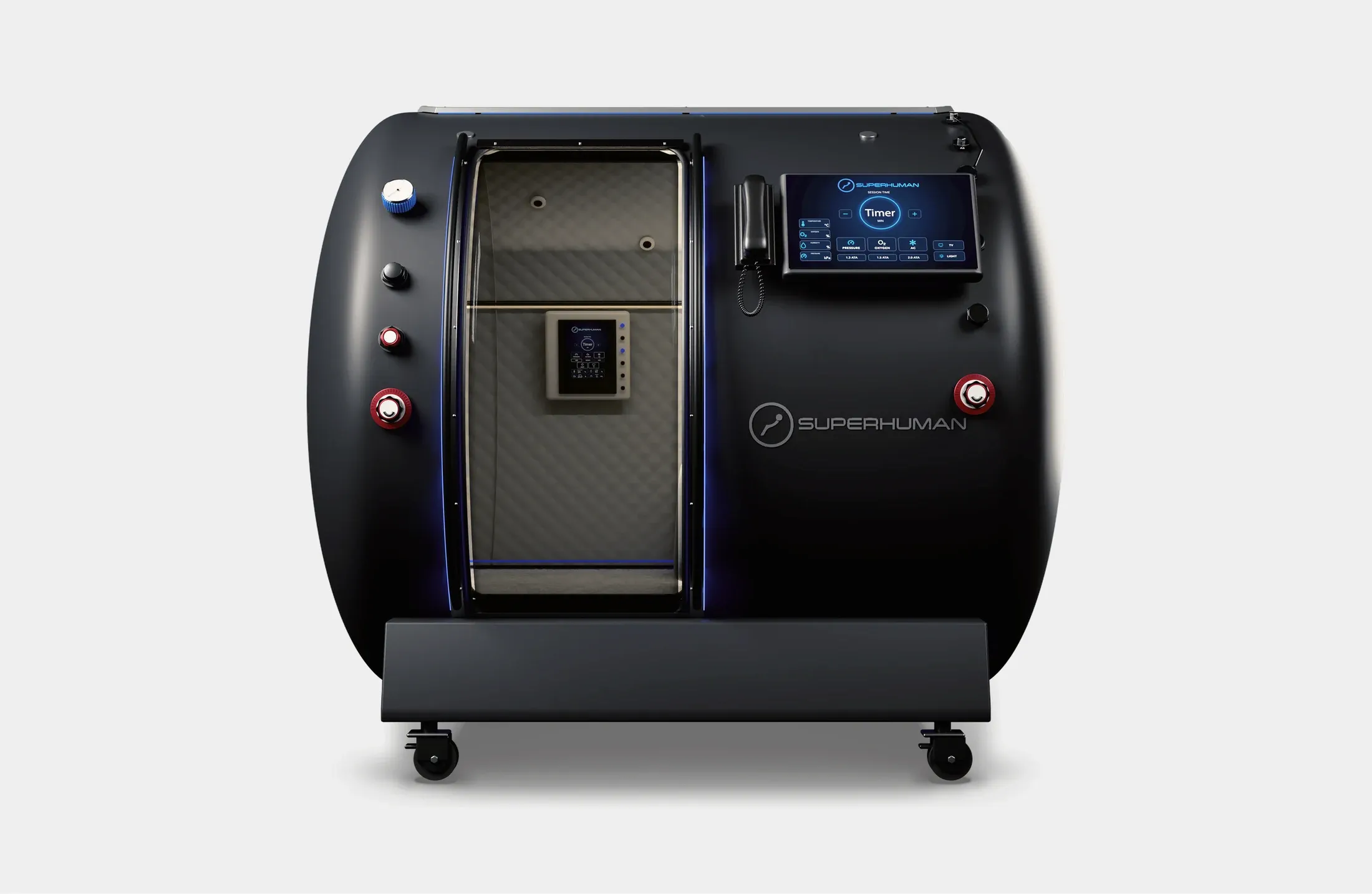
Superhuman T2: 2.0 ATA hard-shell, ASME and PVHO-1 tested, built in an ISO 13485 medical-device facility
Superhuman T2, from $99,900 →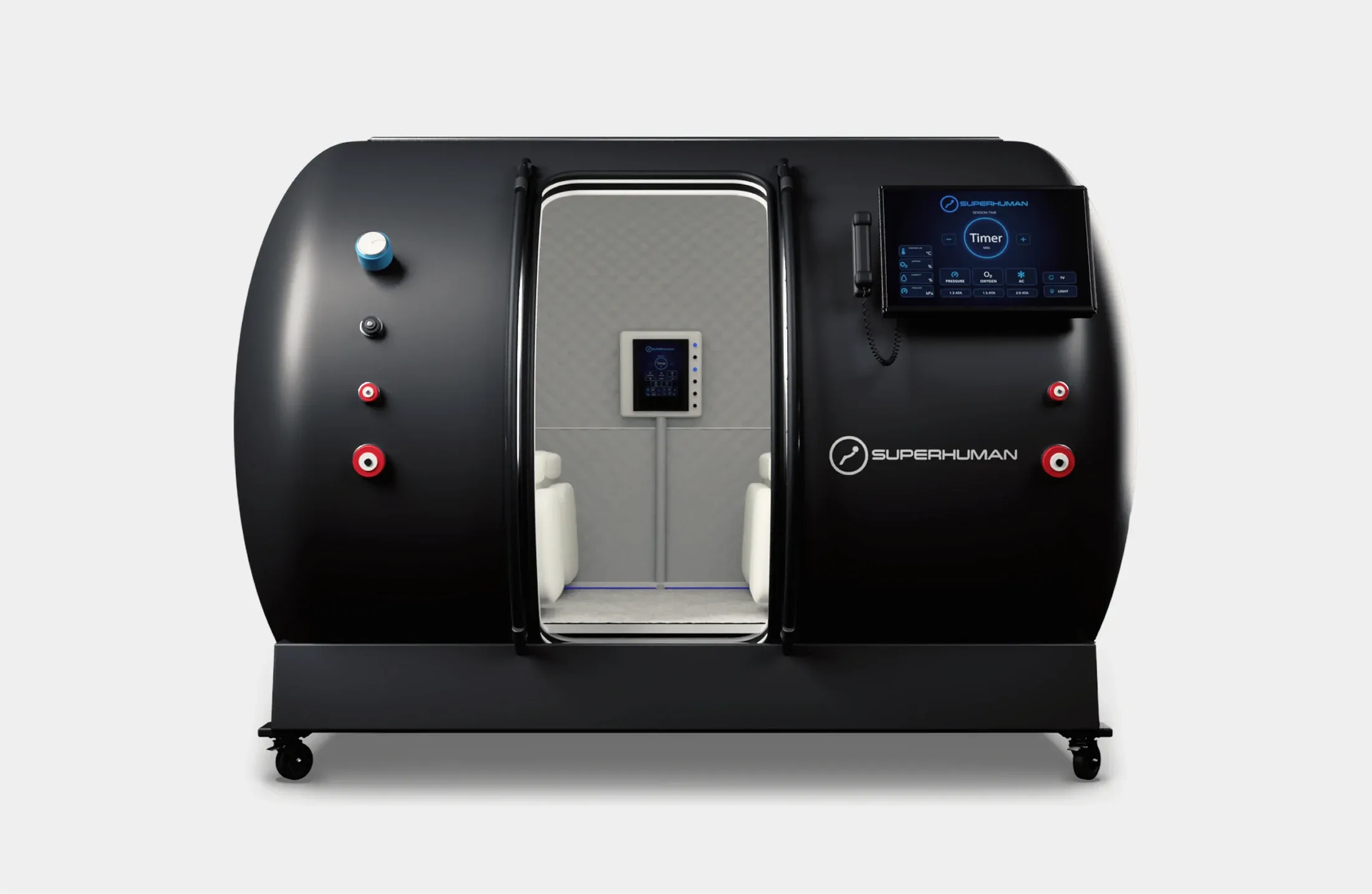
Superhuman T4: 2.0 ATA hard-shell for four occupants, ASME-certified vessel, clinical-scale throughput
Superhuman T4, from $169,000 →Scoping a chamber for a clinical or wellness operation? Book a consultation, or see the numbers in our financing and payments guide. For anything related to dementia care itself, the path runs through a neurologist and the care team, not through equipment of any class.
Before any decision
Safety, and the realities specific to dementia
HBOT's general safety profile is well characterized and manageable in screened patients. Dementia adds considerations that deserve plain language and care, not a footnote.
The common side effects are mundane: ear and sinus barotrauma during compression, temporary vision changes across long courses, fatigue, and claustrophobia. Serious events are rare in screened patients; oxygen-toxicity seizure is the one the literature tracks, and the one absolute contraindication is an untreated pneumothorax. In the dementia studies specifically, the largest open study reported only transient ear discomfort in 2 of its patients, and the meta-analysis found no excess adverse events (Chen 2020; Lin 2024). The full contraindication picture is in our chamber safety guide and the side effects and contraindications guide.
Now the part that generic safety pages miss, and that any honest provider should raise before you do. A person with moderate dementia may not be able to report ear pain as pressure builds, may not be able to equalize their ears on instruction, and may not tolerate enclosure: agitation and panic inside a sealed, pressurized space are not small risks for this population, they are the central practical question. The published studies quietly agree, because they excluded patients with behavioral and psychiatric symptoms. That means the reassuring safety numbers above were collected in milder, steadier patients, and published safety data under-represents the moderate-to-severe stage. A serious program for this population plans for an attendant alongside the patient, close supervision, and a calm exit plan, and says so up front.
Two ethical points belong in the open as well. Consent: cognitive impairment raises genuine capacity questions, and the most careful published study handled it the right way, obtaining consent from legal guardians. Any provider enrolling a person who cannot fully understand an off-label, cash-pay course owes the family the same standard. And the caregiver load: the studied regimens run five days a week for eight to twelve weeks, which means months of daily transport, waiting, and supervision layered onto a caregiving load that is usually already at its limit. That cost is real even though no invoice shows it, and it deserves a place in the family's decision alongside the money.
The access map
For families: money, coverage, and how to vet a provider
If you are researching this for someone you love, you are doing exactly the right thing: reading before spending. Here is the landscape the clinic brochures skip.
Coverage: the answer is written down, by name
Medicare's National Coverage Determination 20.29 lists the conditions HBOT is covered for, and its non-covered list explicitly names "senility" and chronic brain syndromes including Alzheimer's disease (NCD 20.29). Dementia is not a gray area or a pending decision; it is a written exclusion, and commercial insurers largely mirror it. Any provider who suggests reimbursement is likely, or who offers to "help with the insurance paperwork" for a dementia course, should be asked to put that in writing before a dollar moves.
The free route most families miss: clinical trials
Recruiting studies offer HBOT at no cost, inside a monitored protocol, which is simultaneously the cheapest and the most scientifically useful way to explore it, and participating moves the evidence forward for every family behind you. The registry record for the Israeli program behind the 2021 pilot is NCT02790541, and current listings are searchable on ClinicalTrials.gov (search Alzheimer's plus hyperbaric). Eligibility is real and exclusion criteria are strict, but the call costs nothing.
How to vet a provider, and the red flags
The questions that separate serious programs from marketers: which protocol, exactly (pressure, oxygen percentage and delivery, minutes at pressure, total sessions), and which published study justifies it. What chamber class: hard-shell at 2.0 ATA or above with 100% medical oxygen, or a soft concentrator setup that no dementia study used. Who is the supervising physician, and who handles consent when the patient cannot fully give it. What is the plan for agitation or ear pain in a person who may not be able to say what hurts. The total cost in writing, including what happens when the first course ends, given that the largest study's gains faded within months. On the claims side, the audited red flags: "reverses dementia" (that is mouse press coverage and one single-patient case report, nothing more). "Prevents Alzheimer's" (one speculative interview quote, no human data). "11 randomized trials prove it" (true only if you leave out that all 11 were unblinded and rated high risk of bias). "Insurance covers it" (contradicted by Medicare's written exclusion). And soft-chamber equivalence: a 1.3 ATA concentrator session presented as the studied 2.0 to 2.2 ATA dose is a different dose, full stop.
Last, and said with care: the reason you are on this page is that someone you love is disappearing by degrees, and the approved options feel thin against that. Wanting to look everywhere, including here, is not naive; it is love doing its job. What the evidence justifies today is watching this field, asking hard questions, and keeping the neurologist who knows your family's situation at the center of every decision. It does not yet justify betting savings on certainty that no study has earned.
Honest edges
Limitations and open questions
The encouraging evidence is real and so is everything that tempers it. Both halves deserve the same clarity.
On the ledger of weaknesses, the structural ones dominate. There is no sham-controlled or blinded trial in this entire literature. The pooled trials are small (43 to 98 patients), single-country, adjunctive, and rated high risk of bias, with publication bias untestable. The largest open study's gains were gone by 3 to 6 months. The imaging pilot had six patients and no control group. The most-cited case report is a single patient. And no human study has measured the biomarkers (amyloid and tau, on PET, in spinal fluid, or in blood) that would show whether HBOT touches the disease itself rather than only test scores. The prevention claim has no human data at all behind it.
On the other side of the ledger, the signal is unusually coherent for a literature this weak. The pooled trials, the open-label PET data, and the pilot's perfusion MRI all point in the same direction, and they point where the animal mechanism says they should: more blood flow, better metabolism, better scores. The milder MCI group holding gains longer than the Alzheimer's group is the kind of detail a real effect would produce. "Promising and unproven" is not a hedge here; it is the precise state of the evidence.
What would settle the question is known: a sham-controlled, blinded, adequately sized trial with amyloid and tau biomarker endpoints, measuring progression and MCI-to-Alzheimer's conversion over a year or more, run by groups without a chamber to sell. Until that study exists, the honest posture is the one this page has tried to hold: worth watching, worth asking about, not worth mortgaging. And one contextual fact, because we are a chamber manufacturer and you deserve to know why we publish pages like this: if the verdict ever does arrive, it will be decided at medical-grade pressure with 100% oxygen under physician supervision, the dose class every study used and the class of equipment we build. That is the only claim we make on this page, and it forbids us from promising anyone an outcome. For the indication where HBOT is established, covered, and guideline-backed, see the sibling wound healing and HBOT pillar; for the brain-injury version of this same honest format, the TBI evidence page; for stroke, the stroke recovery pillar; and for the mental-health evidence base, the PTSD evidence pillar.
FAQ
Dementia and HBOT questions
Is HBOT FDA-approved for Alzheimer's disease or dementia?
No. Hyperbaric chambers are FDA-cleared for 13 indications (carbon monoxide poisoning, decompression sickness, non-healing diabetic wounds, radiation injury, and others), and no dementia or cognitive condition is among them. The FDA's consumer bulletin names Alzheimer's disease explicitly as a use for which HBOT is not proven, and warns about clinics marketing it anyway. Every dementia use of HBOT in the United States is off-label. Off-label does not automatically mean illegitimate; it means the evidence, not a regulator, has to carry the conversation, and this page lays out that evidence honestly.
Does Medicare or insurance cover HBOT for dementia?
No, and unusually, the exclusion is written out by name. Medicare's National Coverage Determination 20.29 lists the conditions HBOT is covered for, and its non-covered list explicitly includes senility and chronic brain syndromes, naming Alzheimer's disease, Pick's disease, and Korsakoff's disease. Dementia is not merely absent from the covered list; it is named as not covered. Commercial insurers largely mirror Medicare's position, so any clinic that suggests insurance will reimburse a dementia course should be asked for that in writing before you spend anything.
What did the biggest analysis of the research show?
A 2024 meta-analysis in Frontiers in Aging Neuroscience pooled 11 randomized trials covering 847 Alzheimer's patients, nearly all testing HBOT added to standard medication. Pooled results favored HBOT: memory and thinking scores (MMSE) improved by about 3 points on average, dementia-specific scores (ADAS-Cog) improved, and daily-living scores improved, with no excess side effects. The tempering facts travel with it: every one of the 11 trials was unblinded, all were run in one country, sample sizes were small, and the authors rated every trial at high risk of bias. A 3-point average from unblinded trials, where patients and raters know who got treatment, is exactly the pattern expectancy bias produces, so the honest reading is "a real signal that a proper blinded trial has not yet tested."
How many sessions does a course take, and what does it cost?
The studied courses are demanding: 20 daily sessions at 2.2 ATA in the largest open study, or 60 sessions of 90 minutes over three months, five days a week, in the Israeli pilot. There is no standardized dose; published protocols range from 1.15 ATA to 2.2 ATA across 20 to 60-plus sessions. Because dementia is a named non-covered indication, this is a cash market, and no US clinic we reviewed publishes an all-in price, so families should expect a five-figure commitment before travel and time. One more number belongs in the budget conversation: in the largest open study, the cognitive gains had faded by 3 to 6 months, so any honest provider quote should address what happens after the first course ends.
Is a home soft chamber the same treatment the studies used?
No. The human studies behind every encouraging number used hard-shell chambers pressurized to 2.0 to 2.2 ATA while the patient breathed 100% medical oxygen, with medical staff supervising. Soft portable chambers top out around 1.3 ATA and are typically fed by an oxygen concentrator rather than 100% oxygen, which delivers a fraction of the dissolved-oxygen dose, and their FDA clearance covers acute mountain sickness only. No dementia study of any design was run at soft-chamber pressure. A mild-pressure home session is a different and unstudied dose, not a cheaper version of the studied one.
Should HBOT replace medication or approved therapies?
No, and the design of the research itself says so: the pooled trials studied HBOT added to standard medication, not instead of it, and every patient in the largest open study stayed on memantine or rivastigmine throughout. Cholinesterase inhibitors and memantine remain the standard of care, and the approved disease-modifying antibodies (lecanemab and donanemab) are the treatments with biomarker-proven effects on the disease itself, all of which belong in a conversation with the treating neurologist. Nobody should stop or delay prescribed care to fund a chamber course. If a family does explore HBOT, it should be an adjunct decision made with the physician who knows the diagnosis, the stage, and the person.
Last updated: September 2026. This guide is educational and is not medical advice. Hyperbaric oxygen therapy is not FDA-cleared for Alzheimer's disease or any other dementia, Medicare names Alzheimer's disease as non-covered, and any dementia use of HBOT is off-label. Dementia is a serious condition that belongs under a neurologist's care: approved treatments exist, including standard medications and disease-modifying antibodies, and any HBOT decision should be made with the physician who knows the diagnosis and the person.