

Conditions · evidence guide
HBOT for Lyme Disease: What the Evidence Shows
HBOT is not FDA-cleared for Lyme disease. No randomized trial has ever tested it, nothing is registered on ClinicalTrials.gov, and the entire peer-reviewed literature is one case report. The "85% improvement" study every clinic cites was never published. Here is the full record, including what standard care actually says, written for the people this market targets hardest.
The short answer
Three verdicts, one page
Searches for HBOT and Lyme disease blend three very different statements into one answer. Separating them is the whole story: how empty the direct evidence is, what standard care and its own trials say, and why this particular audience is sold so hard.
The honest empty bucket
No randomized controlled trial has ever tested HBOT for Lyme disease. Nothing is registered on ClinicalTrials.gov. The entire peer-reviewed literature is one single-patient case report from 2014. The study every clinic quotes, a 1997 Texas A&M series claiming about 85% improvement, was never published in any peer-reviewed journal, and the tellings disagree on whether 66 or 91 patients were treated.
What standard care actually says
Antibiotics are the evidence-based treatment for Lyme disease, full stop (IDSA/AAN/ACR 2020 guideline). Persistent symptoms after treatment are real and can be severe, but when researchers tested months of extra antibiotics against placebo, placebo matched the drugs: 37% versus 40% improved. Post-treatment Lyme disease syndrome has no proven therapy, and that gap is exactly what the HBOT market sells into.
The most heavily marketed audience in this series
A peer-reviewed survey found more than 30 unorthodox therapies marketed specifically to Lyme patients, oxygen therapy among them. Packages of 40 to 60 chamber sessions and 1.3 ATA home units are sold to people who have been sick for years, with zero outcome data behind any of it. On this page, every claim gets traced to its source, and the marketing claims get traced to theirs.
Two disclosures frame everything below, and they belong at the top. First, HBOT is not FDA-cleared or approved for Lyme disease: the cleared indications cover wounds, carbon monoxide poisoning, decompression sickness, and ten other conditions, and Lyme is not among them (FDA, archived; UHMS indications). Second, neither Medicare nor commercial insurers pay for it (NCD 20.29), which makes this a cash market aimed at people who have already spent years and savings chasing a diagnosis and a fix. Those people deserve the whole record, not the highlight reel. New to the therapy itself? Start with how hyperbaric oxygen therapy works.
If you have Lyme disease and have not finished antibiotic treatment, this page is not your next step. Lyme is a bacterial infection, and antibiotics are the evidence-based treatment: the IDSA, the American Academy of Neurology, and the American College of Rheumatology say so in a joint guideline (Lantos 2021), and no guideline anywhere names a chamber as a substitute. A new tick bite with a spreading rash, facial droop, palpitations, fainting, or new joint swelling goes to a physician, not to a wellness studio. And the rule that overrides everything else on this page: never delay, skip, or replace prescribed antibiotics with chamber sessions. Every claim below concerns people who have already completed standard treatment and still feel sick, which is exactly the population the marketing is built for.
Why oxygen became the pitch
"Oxygen kills the bacteria," graded
Every Lyme-HBOT page leads with the same mechanism story. It sounds like biology. Here is what the published biology actually says, because the gap between the two is the whole sales pitch.
The pitch runs like this: Borrelia burgdorferi, the Lyme spirochete, is microaerophilic, meaning it grows best at low oxygen. Breathing 100% oxygen under pressure dissolves far more oxygen into blood plasma than normal breathing can. Therefore, the pitch concludes, enough sessions create an oxygen environment the bacteria cannot survive, and the infection dies. The first two sentences are true. The conclusion has never been demonstrated anywhere. The one directly relevant culture study found the spirochete retaining its infectivity through weeks of growth even at ambient oxygen levels (Austin 1993). No study, in vitro, in an animal model, or in a human, shows pressure oxygen killing Borrelia. The mechanism is not "preliminary." It is asserted.
There is a second, quieter problem with the premise, and it matters more for the person reading this at midnight. The symptoms that persist after Lyme treatment, the fatigue, the pain, the brain fog, may not be driven by live bacteria at all. That is the leading interpretation of why months of extra antibiotics matched placebo in the NIH-funded retreatment trials (Klempner 2001), and it is why the PTLDS literature describes the cause as unknown and the treatment as unsettled (Aucott 2015). A chamber marketed as an antibiotic you sit inside is solving a problem that may not be the problem, using a killing effect that has never been shown to exist.
For what HBOT legitimately does to oxygen delivery and inflammation biology, our chamber pressure levels guide and the immune support research guide cover the honest version. This page grades the Lyme-specific claims against the Lyme-specific literature, all of it.
The citations
The evidence, study by study
Every load-bearing claim on this page, mapped to the source behind it. Two rows are not studies at all, because the two most important things in this literature are a paper that does not exist and a market that does.
| Study | Design & population | Protocol | What it found | Level |
|---|---|---|---|---|
| Huang et al. 2014 J Chin Med Assoc | Single-patient case report, Taiwan: a man whose joint pain, numbness, sleep disorder, and cognitive symptoms persisted through roughly 4 years of sequential antibiotics after serology-positive Lyme disease | 30 sessions of 90 minutes at 2.5 ATA, after other infectious and noninfectious mimics were excluded | The authors report symptoms resolving in stages across the 30 sessions. No control, no sham, no blinding, no microbiological endpoint, no stated follow-up. This is the only peer-reviewed Lyme-HBOT publication that exists, and its title's word "effective" is a case-report word, not an evidence grade | Case report (n=1) |
| Fife 1997 (Texas A&M) Unpublished; book chapter 2017 | Clinical series at the Texas A&M Hyperbaric Laboratory, completed around 1997. NEVER published in a peer-reviewed journal; no dataset is publicly auditable | Clinical hard-chamber HBOT; protocol details exist only in secondary tellings | Marketed as "improvement in approximately 85 percent." One clinic PDF says 66 patients treated; other pages say 91 enrolled and 1,995 treatments. The numbers disagree because there is no paper to check them against. Survives only as a book chapter by Fife's own group and as clinic marketing | Unpublished series |
| Austin 1993 Can J Microbiol | In-vitro culture study of an infective Borrelia burgdorferi strain, the only directly relevant oxygen-biology paper | Serial culture passage at 4% oxygen versus ambient air (about 21% oxygen) | The spirochete RETAINED infectivity for 20 passages at low oxygen and through 15 passages even at ambient oxygen. Borrelia prefers low oxygen but demonstrably tolerates ordinary oxygenated tissue conditions. No study, in vitro, animal, or human, shows pressure oxygen killing it | In vitro (mechanism) |
| Klempner et al. 2001 N Engl J Med | Two randomized placebo-controlled trials, 129 patients with well-documented, previously treated Lyme disease and persistent pain, neurocognitive symptoms, or fatigue; stopped early for futility | IV ceftriaxone for 30 days, then oral doxycycline for 60 days, versus matched placebos | Improvement on prolonged antibiotics: 37%. Improvement on placebo: 40% (p=0.96). Quality of life was severely impaired in both arms. The suffering is real and documented; the retreatment benefit is not. This is the baseline any adjunct must beat | Negative RCTs (standard care) |
| Lantos et al. 2021 (IDSA/AAN/ACR) Clin Infect Dis | The US clinical practice guideline for Lyme disease, jointly issued by the infectious disease, neurology, and rheumatology societies | Evidence-graded recommendations across prevention, diagnosis, and treatment | Antibiotics are the standard, evidence-based treatment. For persistent nonspecific symptoms after recommended treatment, without objective evidence of reinfection or treatment failure, the guideline recommends AGAINST additional antibiotic therapy (strong recommendation). HBOT appears nowhere in it | Practice guideline |
| Aucott 2015 Infect Dis Clin North Am | Review of post-treatment Lyme disease syndrome (PTLDS) from the Johns Hopkins group that studies it prospectively | Definition, epidemiology, and management evidence review | PTLDS: fatigue, musculoskeletal pain, and cognitive complaints persisting 6 months or more after completed antibiotic therapy. Cause unknown; serology cannot confirm it; "optimal treatment of PTLDS awaits more precise understanding of the pathophysiologic mechanisms." No proven therapy exists | Review (PTLDS) |
| Lantos et al. 2015 Clin Infect Dis | Systematic web survey of alternative therapies marketed specifically to Lyme patients, with a PubMed evidence check, by IDSA guideline authors | Commercial websites advertising non-antimicrobial Lyme treatments | More than 30 marketed therapies identified, including oxygen and reactive oxygen therapy. The medical literature "did not substantiate efficacy or, in most cases, any rationale" for the advertised treatments, and some are potentially harmful. The targeting of this audience is documented, not alleged | Market survey (peer-reviewed) |
| Vox et al. 2018 JAMA | Crowdfunding analysis across GoFundMe and three other platforms: 1,059 campaigns for five scientifically unsupported treatments | Campaigns sought a combined $27.2 million | Long-term antibiotics for "chronic Lyme disease" and HBOT for brain injury both appear among the five. The out-of-pocket desperation economy around unsupported Lyme and HBOT claims, quantified in a major journal | Market analysis |
PMIDs, DOIs, and links for every row are in the sources card. The synthesis: the direct HBOT-Lyme evidence is one case report plus one unpublished 1990s series; the mechanism claim is contradicted by the one relevant culture study; the standard-care literature is strong, and it says antibiotics, with retreatment failing against placebo; and the market targeting this audience is documented in peer-reviewed journals. That is the state of the evidence in October 2026.
The empty bucket, explained
How does a treatment sold for three decades end up with no controlled trial? Follow the incentives. HBOT for Lyme lives in the off-label cash market: clinics and equipment sellers earn from packages today, and a rigorous sham-controlled trial costs millions, takes years, and might answer "no." Nobody in that market is paid to run it, so nobody has. What a real trial would require is not exotic: patients with well-documented, previously treated Lyme and persistent symptoms, randomized to the marketed protocol against a convincing sham, with fatigue, pain, and cognitive scores measured by blinded assessors. The Lyme field itself ran exactly this design for antibiotics (Klempner 2001), so the methodology is proven and the patient population is identifiable. The trial simply does not exist, and as of October 2026 nothing for Lyme and hyperbaric oxygen is even registered on ClinicalTrials.gov. When a clinic tells you research is "emerging," ask for the registration number.
The 85% claim, traced
The number that built this market deserves its own paragraph, because you will meet it everywhere. Around 1997, William Fife's group at the Texas A&M Hyperbaric Laboratory treated a series of Lyme patients with HBOT. The work was never published in a peer-reviewed journal. It survives as a book chapter written by Fife's own group (Fife and Eckert 2017) and as marketing copy that cannot keep its own numbers straight: one clinic PDF says 85% of 66 treated patients improved (clinic PDF), while other pages describe 91 enrolled patients and 1,995 treatments. No randomization, no control group, no peer review, no auditable dataset, and a patient population defined loosely enough that nobody can say what was actually treated. This is not a scandal; it is just not evidence. The first question for any Lyme-HBOT provider is the one this page is built around: published where?
The terminology fight, fairly
PTLDS versus "chronic Lyme"
If you have been sick for years, you have met both labels, and probably strong opinions about each. Here is the honest map, because what you call the illness changes what gets sold to you.
Post-treatment Lyme disease syndrome (PTLDS) is the term the medical literature uses: fatigue, musculoskeletal pain, and cognitive complaints persisting six months or more after properly treated, well-documented Lyme disease (Aucott 2015). It is real, it is studied prospectively, and it has no proven treatment. "Chronic Lyme disease" is the looser label, applied by different people to that same syndrome, to untreated late Lyme, to lingering symptoms with unconfirmed diagnoses, and sometimes to medically unexplained illness with no objective evidence of Borrelia infection at all. An international panel of Lyme researchers argued in the New England Journal of Medicine that the loose label is precisely the opening through which unproven therapies get marketed (Feder 2007).
This page takes no side in the label war, because it does not need to. Two things are true at once: the suffering is real and often severe, the Klempner trials measured quality-of-life impairment comparable to serious chronic illness; and the desperation the label carries is a market, documented by the same journals that treat the patients (Lantos 2015). What the label question does not change is the HBOT question: in every labeled group, PTLDS, late Lyme, self-diagnosed chronic Lyme, the controlled evidence for a chamber is the same empty bucket. If your diagnosis is uncertain or your symptoms are new or changing, that is a physician conversation, and it is free of charge compared to everything else on offer.
One more honest data point, from inside your own ecosystem. Daniel Cameron, a physician with three decades treating Lyme and a past president of ILADS, the "Lyme-literate" professional society, reviewed HBOT for his patients and concluded: no large controlled trials have demonstrated sustained benefit, and he does not routinely recommend it (Cameron, accessed Oct 2026). When even the clinicians most open to unconventional Lyme care will not endorse the chamber, the people selling it are out beyond both medical establishments. For the cognitive symptoms specifically, our brain fog and HBOT research guide covers what the broader literature does and does not support.
The claim that keeps packages selling
"It gets worse before it gets better": the Herxheimer question
Many Lyme patients are told that feeling worse during a chamber package is a good sign, a "Herxheimer reaction" proving the bacteria are dying. Here is what that reaction actually is, and what is actually documented.
The Jarisch-Herxheimer reaction is real. Within 24 hours of starting antibiotics for a spirochetal infection, some patients get shaking chills, a fever spike, and a flare of their symptoms, resolving within hours; it is driven by bacterial proteins and the immune response to organisms actually being killed. In Lyme disease specifically, prospective studies and trials measured it in roughly 5 to 30 percent of patients, depending on the antibiotic (Butler 2017). Every documented case in that literature shares one feature: an antimicrobial drug doing measurable killing.
Now apply that to the chamber. There is no published evidence that HBOT produces a Herxheimer reaction, because there is no published evidence that HBOT kills Borrelia in the first place. A mid-package flare has mundane explanations that do not require dying bacteria: ear barotrauma, claustrophobia and anxiety, the physical fatigue of daily sessions, poor sleep, and the simple fact that PTLDS symptoms fluctuate on their own, which is why uncontrolled stories cannot settle any of this. "It gets worse before it gets better" is unfalsifiable sales armor: every bad week confirms the treatment, and every good week does too. A provider who reaches for it should be able to show you the paper. There is not one.
The decision math
Clinic package versus home chamber, in the open
Many people reading this page are not choosing whether to try HBOT at a clinic. They are choosing between a five-figure clinic package and buying a chamber for the house. Here is the math, and next to it, what is known versus what is unknown.
The clinic route
No studied Lyme protocol exists: the single case report used 30 sessions at 2.5 ATA, and clinics commonly sell packages of 40 to 60 sessions, five days a week, a daily commute for two to three months. No Lyme clinic publishes Lyme prices. For order of magnitude only: the 2026 plastic-surgery systematic review reports per-session prices of $150-650 in the HBOT literature (Molina-Vega 2026), and one clinic in the adjacent off-label brain-injury market has published $5,000-8,000 for a 40-session block. A 60-session package lands in four-to-five-figure territory, cash, with no insurer behind any of it (NCD 20.29). How coverage works for the indications that are covered is mapped in our insurance coverage guide.
The home-chamber route
The home market is aimed squarely at this audience, because daily sessions for months fit a chronic illness narrative. Soft 1.3 ATA units sell for several thousand dollars and up; clinical-class hard chambers cost ten times that (our own lineup and pricing are on the home chamber page, and the full economics in the chamber cost guide and the home versus clinic comparison). Now the honesty the sellers skip. What is known: the one published case used 2.5 ATA with 100% oxygen; soft units cannot reach that class; no study of any design exists at 1.3 ATA for Lyme. What is unknown: whether any pressure, any protocol, any chamber helps at all, because the controlled test has never been run. A home chamber converts an unproven per-session expense into an unproven capital expense. The unknown does not get smaller when you own the equipment.
The comparison that matters
Set both routes against the free one. The IDSA guideline pathway, diagnosis, antibiotics, and honest counseling about PTLDS, costs a physician visit and is the only route with randomized evidence behind any of it. Even prolonged antibiotics, the retreatment the Lyme community most often wants, could not beat placebo in two NIH-funded trials (Klempner 2001). A chamber package is a bet that an untested intervention outperforms a tested one that already failed. You are allowed to make that bet with your own money; you deserve to make it knowing those are the terms. Our how many HBOT sessions guide shows what session counts look like in the indications that actually have evidence, for contrast.
The equipment side
Pressure classes, and nothing more
The Lyme community is heavily marketed mild home chambers, so the equipment question deserves a straight answer. Here is the dose that appears in the literature, the hardware categories, and zero outcome claims, because no equipment class has Lyme outcome data to claim.
The one peer-reviewed case used a clinical hard chamber at 2.5 ATA breathing 100% oxygen, and the unpublished 1990s series used clinical hard chambers as well. Soft portable chambers operate around 1.3 ATA, typically concentrator-fed rather than 100% medical oxygen, and their FDA clearance covers acute mountain sickness only: they cannot reach the pressure class of even the thinnest published Lyme data, such as it is. Our own soft-shell S1 (1.3-1.5 ATA, concentrator-fed) sits in that class, and we do not present it as Lyme equipment, because nothing is. The regulatory and engineering details live in our medical-grade chambers explainer, the ATA pressure guide, and the soft-shell chamber guide.
For an operator whose clients keep asking about Lyme, the equipment-class takeaway is narrow and factual: clinical hyperbaric work, the kind every study on this page used, sits in hard-shell, medically engineered territory, with certified pressure vessels, documented oxygen delivery, and trained oversight. The single-person rung of that class in our lineup is the Superhuman L1 (2.0 ATA hard-shell, from $49,900), with the two- and four-person models shown below. Our chambers are built to that engineering class, which is the only claim we make here. It is a claim about hardware. It is not a claim about Lyme disease, and on this page it cannot be: no chamber, ours or anyone else's, has been shown to change the course of this illness.
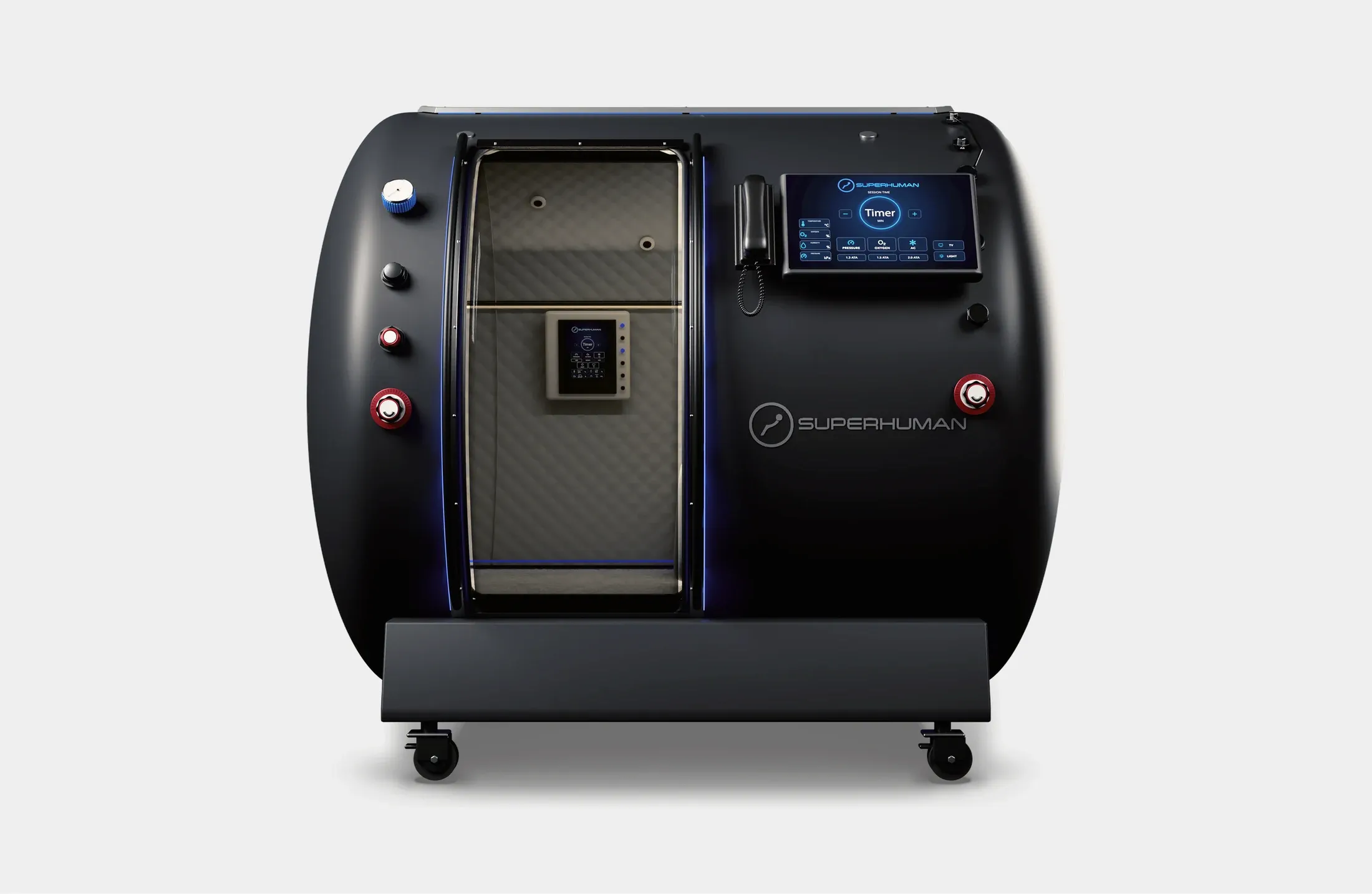
Superhuman T2: 2.0 ATA hard-shell, ASME and PVHO-1 tested, built in an ISO 13485 medical-device facility
Superhuman T2, from $99,900 →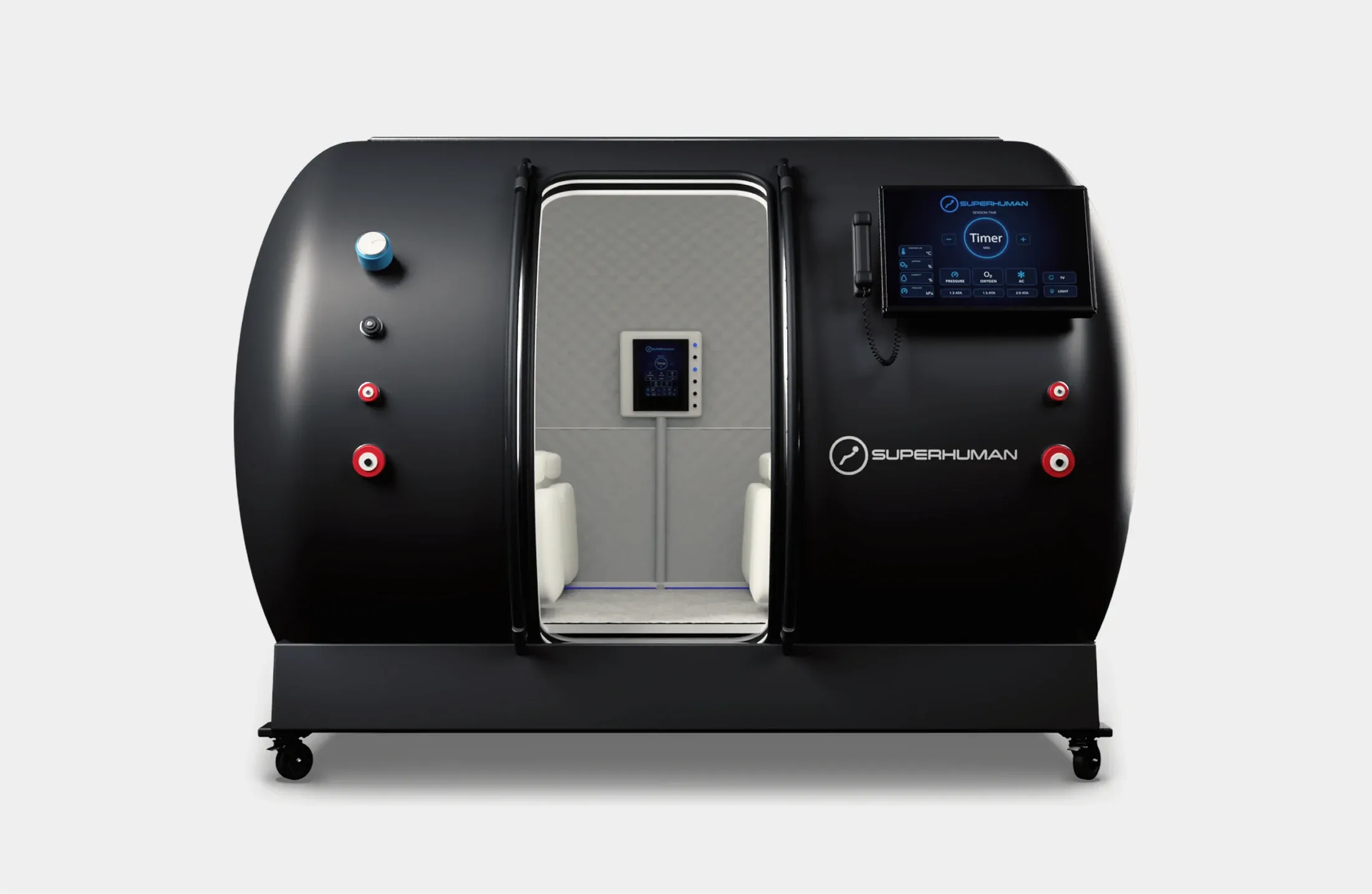
Superhuman T4: 2.0 ATA hard-shell for four occupants, ASME-certified vessel, clinical-scale throughput
Superhuman T4, from $169,000 →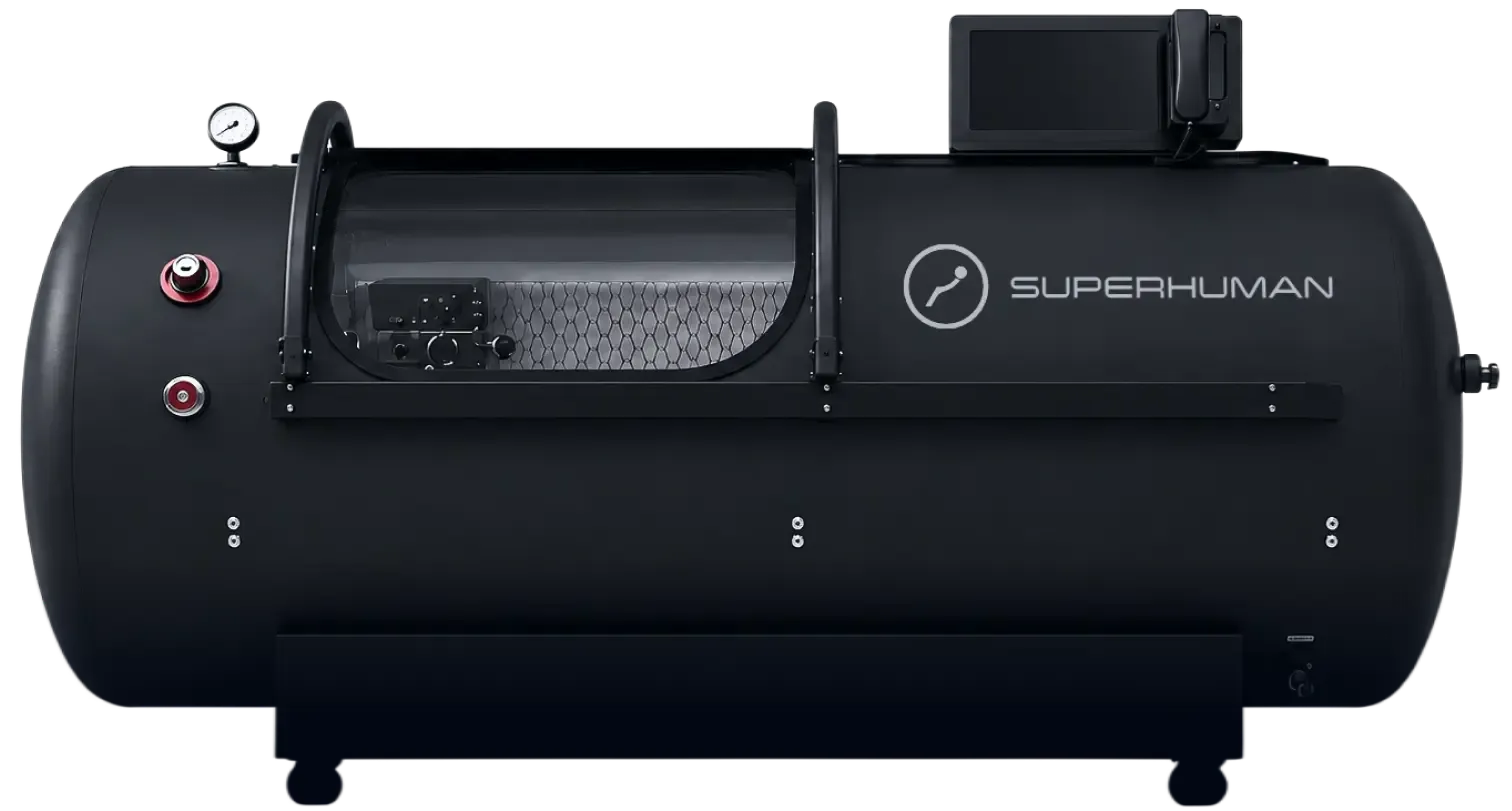 Single-person hard-shell Superhuman L1: 2.0 ATA, one occupant. Superhuman L1, from $49,900
 Scoping a chamber for a clinical or wellness operation? Book a consultation, or see the numbers in our financing and payments guide. For anything related to an actual Lyme patient, the path runs through a physician and the IDSA guideline, not through equipment of any class.
The hardware facts
Engineering class, on paper.
Tap one for what it governs and which chambers it covers.
| A certification is not an outcome claim. What it says is narrower: the vessel is engineered, tested, and documented, and the soft shell in the last column is not the same class of equipment. That class difference is the only hardware point this page makes. |  |  |  |  |  |
|---|---|---|---|---|---|
| ASME PVHO-1 Vessels with a person inside. Starts at 2 psi. | Tested to ASME PVHO-1 standards | Tested to ASME PVHO-1 standards | Tested to ASME PVHO-1 standards | Tested to ASME PVHO-1 standards | Certification in progressListed here once issued. |
| ASME Section VIII Steel, thickness, welds. We hold the certificate. | Certified | Certified | Certified | Certified | Not applicableSoft shell, no steel pressure vessel. |
| ISO 13485 Medical device quality management. Entity, not chamber. | Applies to all of our chambers. | ||||
| ISO 9001 General quality management. | Applies to all of our chambers. | ||||
| CE / UKCA EU and UK market conformity. The manufacturer declares. | CE, PED | CE, PED | CE, PED, UKCA | CE | CE |
ASME PVHO-1 4 tested to, 1 pending
Vessels with a person inside. Starts at 2 psi.
- Superhuman T4 Tested to ASME PVHO-1 standards
- Superhuman T2 Tested to ASME PVHO-1 standards
- Superhuman X Tested to ASME PVHO-1 standards
- Superhuman L1 Tested to ASME PVHO-1 standards
- Superhuman S1 Certification in progress Listed here once issued.
ASME Section VIII 4 certified, 1 not applicable
Steel, thickness, welds. We hold the certificate.
- Superhuman T4 Certified
- Superhuman T2 Certified
- Superhuman X Certified
- Superhuman L1 Certified
- Superhuman S1 Not applicable Soft shell, no steel pressure vessel.
ISO 13485 5 certified
Medical device quality management. Entity, not chamber.
Applies to all of our chambers.
ISO 9001 5 certified
General quality management.
Applies to all of our chambers.
CE / UKCA 5 declared
EU and UK market conformity. The manufacturer declares.
- Superhuman T4 CE, PED
- Superhuman T2 CE, PED
- Superhuman X CE, PED, UKCA
- Superhuman L1 CE
- Superhuman S1 CE
Before the first session
Safety for the Lyme audience
HBOT has a real but manageable safety profile, and this page invents no Lyme-specific contraindications. What this audience adds is a treatment-status problem and an energy problem, and both are load-bearing.
The general profile is the standard one: ear barotrauma during compression is the most common problem, plus sinus pain, fatigue, temporary vision changes across long courses, and claustrophobia, especially in single-person chambers. The serious but rare risk is an oxygen-toxicity seizure, and the one absolute contraindication is an untreated pneumothorax (Heyboer 2017). The full picture is in our chamber safety guide and the side effects and contraindications guide. Certain chemotherapy agents and a small set of other conditions also rule the treatment out, which is why screening belongs to a clinician, not an intake tablet.
The Lyme-specific cautions on this page are about context, not invented physiology. Treatment status first: a person with untreated or partially treated Lyme has a bacterial infection that antibiotics are proven to treat, and the chamber question is premature until that is finished; Lyme carditis and neurologic Lyme are physician-managed conditions, full stop. The energy budget is real: the marketed protocols ask for daily sessions across two to three months, and the core symptom of this population is exhaustion; a course that consumes the week is not a neutral trial of therapy. The medication list matters: years of complex regimens and supplement stacks belong in a physician's review before anyone signs a package. The summary that matters: screened, supervised, physician-informed, and never instead of standard care, or not at all.
For wellness operators
What you can say, and what you must not claim
Lyme patients will find your chamber, and they will arrive more researched, more burned, and more hopeful than any other client group you serve. The compliant answers are short, the referral is the product, and this audience has a long memory for who told them the truth.
| You can say | You must not claim | |
|---|---|---|
| Talking about Lyme disease | HBOT is not FDA-cleared for Lyme, no controlled trial has ever tested it, and the peer-reviewed literature is one case report | That sessions kill Borrelia, cure chronic Lyme, or carry any published success rate. There is no number you can honestly quote |
| A client with years of symptoms | Hand them the full record, including the empty evidence base, and point them back to their physician and the IDSA guideline | Confirming a self-diagnosis of "chronic Lyme," or any suggestion of pausing or replacing prescribed antibiotics |
| The Herxheimer framing | Explain that herxing is documented only with antibiotic treatment of spirochetal infections, in 5-30% of patients depending on the drug | Selling a mid-package symptom flare as proof the treatment is killing bacteria. That claim has no published basis |
| Pressure honesty | State your chamber's rated pressure and that the one published case used 2.5 ATA with 100% oxygen in a clinical hard chamber | Implying a 1.3 ATA soft chamber delivers a studied Lyme dose. No studied Lyme dose exists at any pressure |
One script covers the conversation that matters most. "I have had Lyme for six years and nothing works. Will this finally help?" The honest answer: nobody gets to promise that, and the published record for exactly your situation is one case report and one unpublished study from 1997. There is no percentage I can quote you, and anyone who quotes you one should have to name the paper. What we can do is show you the full record, and the first call after this one should be to the physician managing your care. An operator who says that out loud will lose some package sales and keep every bit of trust, and with this audience, people who compare notes in forums for years, trust is the only asset that compounds.
The patient's checklist
If you are considering HBOT for Lyme
Off-label does not mean off-limits; it means the burden of diligence moves to you. Here is the diligence, written for someone who has already done years of it.
Get the standard-care position first
Before any chamber conversation, three physician questions. Is my diagnosis confirmed, and by what testing, because two-tier serology cannot confirm or exclude PTLDS and many "chronic Lyme" labels sit on uncertain ground. Have I completed the recommended antibiotic course, because if not, that is the evidence-based next step and it is not optional. And is there anything new or changing, because cardiac or neurologic features are emergencies-in-slow-motion, not wellness questions. The guideline behind all three is public (IDSA/AAN/ACR 2020), and the FDA-indications side is mapped in our FDA-cleared indications guide.
Questions for the provider
Which protocol, exactly? Pressure in ATA, oxygen percentage and delivery, minutes at pressure, total sessions, and what it is extrapolated from; the honest answer is "a single case report at 2.5 ATA," and anything more confident is invention. What is the total itemized cost, in writing, including what happens to the balance if you stop at session fifteen. Who screens me: a clinician who reviews your treatment history and medications, or a waiver and a technician. And the question that separates honest providers from marketers: what do you tell patients the evidence actually is? One who answers "one case report, no controlled trials, and your doctor should know you are doing this" has done the reading. One who answers with a percentage has not.
Red flags, audited against the literature
"85% of patients improved": an unpublished 1997 series with no paper behind it, and the tellings disagree on the patient count (the claim as marketed). "Oxygen kills the bacteria": contradicted by the one relevant culture study (Austin 1993). "Herxing means it is working": a reaction documented only with antibiotics (Butler 2017). "You can stop your antibiotics": walk out, and tell your physician. A 1.3 ATA home unit sold with 2.5 ATA stories: a different, unstudied dose wearing the studied one's clothes. Pay-in-full-up-front packages: the standard cash-market pressure tactic, at its worst aimed at exactly this audience.
Honest edges
Limitations and open questions
Fairness cuts both directions on this page, and the direction that cuts against our own caution deserves to be stated as plainly as the other one.
Start there: absence of trials is not proof of absence of effect. The Huang case report is genuinely intriguing: a real patient, years of failed antibiotics, staged improvement across a defined protocol, published by hospital physicians with no chamber to sell. PTLDS has no proven treatment, the suffering is severe and documented, and the desperation economy around it (Vox 2018) exists precisely because medicine has not solved this. If someone ran a proper sham-controlled trial of HBOT as a PTLDS adjunct and it showed benefit, this page would need rewriting, and we would rewrite it gladly. That is the honest state of play: unproven is not disproven.
But the burden of proof sits on the seller, and the market's track record is the problem. Three decades of selling this protocol to this community have produced zero controlled data: not one randomized trial, not one registered study, not one replicated case series with a comparison group. The mechanism claim is contradicted by the only relevant culture study. The flagship statistic cannot survive contact with a citation check. And the audience is documented to be targeted exactly where it hurts (Lantos 2015). Until the trial exists, the fair verdict is: investigational, untested, not covered, and never a substitute for antibiotics or for a physician's care.
And one closing fact this page is built on. If an answer ever comes, it will come from medical-grade pressure with 100% oxygen under supervision, the dose class the one published case used, and it will not come from 1.3 ATA home units sold on borrowed biology. For the sharpest contrast in this series, see the sibling cancer and HBOT pillar, where one adjacent use is fully cleared and covered; the stroke pillar, where an uncontrolled literature finally met its sham-controlled test and lost; and the surgery recovery pillar, where a cleared exception sits next to an unproven market. Lyme is the page where even the uncontrolled literature barely exists. That is the most honest sentence we can write about it.
FAQ
Lyme disease and HBOT questions
Is HBOT FDA-approved for Lyme disease?
No. Hyperbaric chambers are FDA-cleared for 13 indications (carbon monoxide poisoning, decompression sickness, non-healing diabetic wounds, radiation injury, and others), and Lyme disease is not among them. It is also not a UHMS indication, and Medicare does not cover it, so every Lyme use of HBOT in the United States is off-label and cash-pay. A peer-reviewed survey by IDSA guideline authors found oxygen and reactive oxygen therapies among the more than 30 unorthodox treatments marketed specifically to Lyme patients, and concluded the literature does not substantiate their efficacy. Any clinic page describing HBOT as an approved or proven Lyme treatment is misstating the record.
Are there any clinical trials of HBOT for Lyme disease?
No randomized controlled trial has ever been published, and as of October 2026 nothing is registered on ClinicalTrials.gov for Lyme and hyperbaric oxygen. The entire peer-reviewed literature is one single-patient case report from Taiwan (Huang 2014): a man whose symptoms persisted through about four years of antibiotics and then resolved during 30 sessions at 2.5 ATA, reported without a control, a sham, or a microbiological endpoint. The larger study clinics cite, a 1997 Texas A&M series, was never published in a peer-reviewed journal. Compare this with the standard-care side, where antibiotic regimens and even retreatment have been tested in randomized trials. The empty bucket is not a technicality; it is the state of the evidence.
Can HBOT kill the Lyme bacteria?
That claim is marketing, not documented biology. The syllogism goes: Borrelia burgdorferi is microaerophilic (it prefers low oxygen), so flooding the body with pressurized oxygen must kill it. What the published record actually shows: the one directly relevant culture study kept the spirochete infective through weeks of growth even at ambient oxygen levels, and no study in vitro, in animals, or in humans demonstrates pressure oxygen killing Borrelia. There is also a deeper problem with the premise. Post-treatment symptoms may persist after the infection itself is gone, which is one leading explanation for why months of extra antibiotics matched placebo in the NIH-funded retreatment trials. If live bacteria are not driving the symptoms, a treatment aimed at killing them is solving the wrong problem.
What about the Texas A&M study reporting 85% improvement?
Here is that claim, traced. Around 1997, William Fife's group at the Texas A&M Hyperbaric Laboratory treated a series of Lyme patients with HBOT. The work was never published in a peer-reviewed journal; no dataset is publicly auditable. It survives as a book chapter written by Fife's own group and as marketing copy, and the tellings disagree: one clinic PDF says 85% of 66 treated patients improved, while other pages describe 91 enrolled patients and 1,995 treatments. Numbers that cannot be checked against a paper cannot carry the weight clinic pages put on them. When any provider quotes you a percentage for Lyme and HBOT, the one question that matters is: published where?
Does insurance cover HBOT for Lyme disease, and what does a course cost?
No. Medicare's NCD 20.29 covers hyperbaric oxygen therapy only for its listed indications, Lyme is not one of them, and commercial insurers follow the same line, so Lyme courses are cash-pay everywhere in the US. No Lyme-HBOT clinic publishes Lyme-specific prices. For order of magnitude only: a 2026 systematic review reports per-session prices of $150-650 in the HBOT literature, and one clinic in the adjacent off-label brain-injury market has published $5,000-8,000 for a 40-session block. Clinics commonly sell 40-60 session packages, which puts a course in the four-to-five-figure range. Get the total itemized cost in writing before the first session, and be wary of any package priced to be paid in full up front.
Is a home soft chamber the same treatment the case report used?
No. The one published case used a clinical hard chamber at 2.5 ATA breathing 100% oxygen. Soft portable chambers operate around 1.3 ATA, typically fed by an oxygen concentrator rather than 100% medical oxygen, and their FDA clearance covers acute mountain sickness only. Dissolved plasma oxygen scales with pressure, so a mild home session is not a cheaper version of the reported dose; it is a different, completely unstudied one. Lyme patients are heavily marketed 1.3 ATA home units precisely because daily home use sounds practical for a chronic illness. The honest answer is that no equipment class, at any pressure, has outcome data for Lyme disease, and a 1.3 ATA unit is the furthest of all from the one dose that appears in the literature.
Last updated: October 2026. This guide is educational and is not medical advice. Hyperbaric oxygen therapy is not FDA-cleared for Lyme disease, and any Lyme use is off-label. Antibiotics are the evidence-based treatment for Lyme disease; never delay, skip, or substitute them. Persistent symptoms after treatment belong with your treating physician, who can weigh them against your history, your testing, and the full record, including how empty the HBOT side of that record currently is.